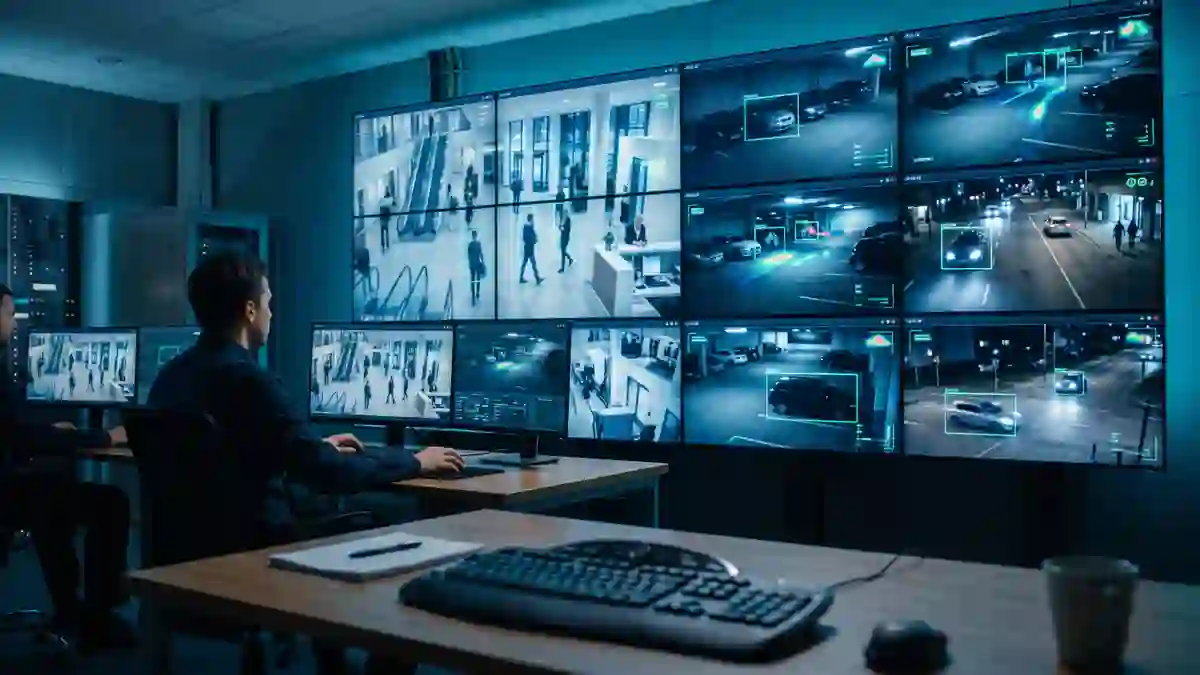
The door lock is the first thing a guest touches and the last thing that should ever fail. In a smart home the lock gains new duties: keyless entry, door-status monitoring, Arrival and Leaving scenes and — above all — reliability even when the internet is gone. Loxone released a device that covers all of it at once: the Door Lock Air.
Below is the official presentation of the lock (English). Further down we break down how it works, which variants exist and why we chose it as the primary access solution for our reference show unit in Phuket.
What the Door Lock Air is
The Door Lock Air is a motorised mortise lock with a built-in drive that locks and unlocks the door automatically on command from the Loxone system. The mechanism sits inside a standard prepared door leaf, and the drive with its turning knob mounts on the door itself. The key never disappears: mechanical opening remains as a backup.
The key difference is communication over the Loxone Air protocol — Loxone’s own wireless protocol that runs locally through the Miniserver, with no cloud and no third-party gateway. The lock reports the door position and its state to the system, and the system drives it inside scenes — all within the home’s local network.
Inductive power: a lock without batteries
The Door Lock Air comes in battery-powered variants, but the flagship version is inductive. Power is transferred contactlessly through an inductive pair on the door leaf and frame: one part in the frame, the other on the leaf. When the door is closed they line up and the lock draws energy without a single wire on the moving leaf.
- No batteries on the door — nothing to replace, no dead lock at the worst moment.
- No wires on the leaf — no flexible cable transition through the hinges.
- For reliable power transfer the gap between the inductive halves must be 2–3 mm (5 mm maximum) — so precise height and depth adjustment during installation matters.
For projects where routing an inductive plate is difficult, battery versions remain: depending on the door standard that is 2×AAA or a 1/2 AA lithium cell (LS 14250). At a typical load of up to 10 openings per day battery life is around 2 years, and the system warns you in advance about a low charge.
How the door opens
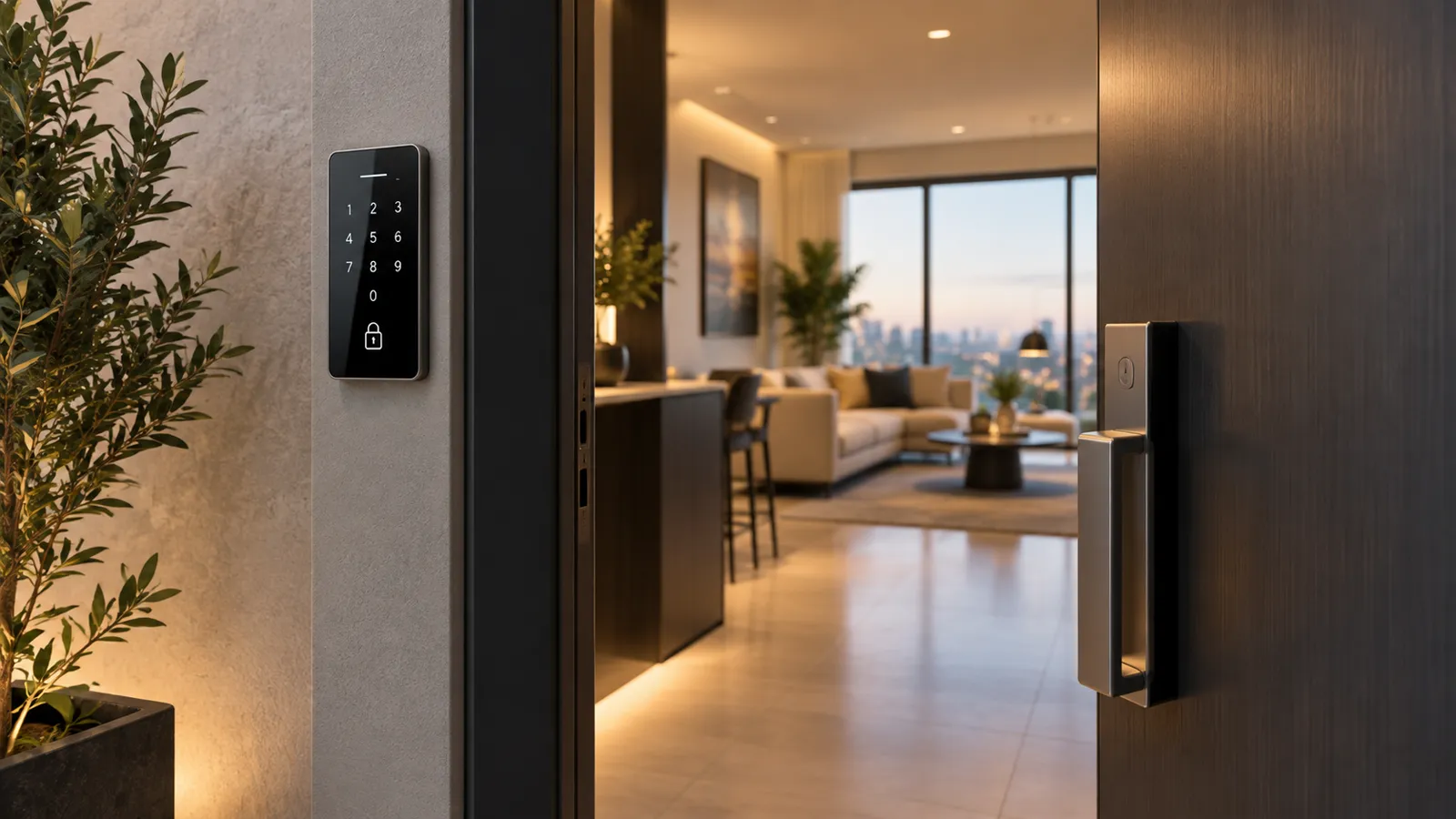
The Door Lock Air pairs with the Loxone NFC Code Touch reader — a backlit glass panel by the entrance. The door can be opened in several ways, all configurable in the system:
- By an NFC tag or card — tap and enter;
- By a numeric code on the touch panel — handy for guests and service without handing out keys;
- From the Loxone app — for example, to let a courier in remotely;
- Automatically by scene — Arrival disarms the home, turns on the lights and opens the door.
Every code and tag can carry its own rights and schedule, and the log shows who entered and when. For rentals and show units that is a distinct advantage: access is granted and revoked in seconds, with no physical keys to reissue.
Full door control from the system
The lock doesn’t just open — it tells the system its state. The Miniserver sees the door position (closed/open, locked/unlocked), the device online status and power warnings. Useful automations build on that data:
- A reminder if the door was left unlocked when you leave home;
- Automatic locking on a Night or Away scene;
- A push notification when the door is opened;
- Integration with security, lighting and climate — entry triggers the right scene.
The main advantage — it works without internet
Many smart locks on the market depend on the cloud: lose the internet and opening by code or from the app stops working. The Door Lock Air is built differently. It talks to the Miniserver over the local Loxone Air protocol, and all scene logic runs inside the home. Even with no internet at all the lock keeps opening by NFC and code, and automations keep running.
«A smart lock must stay a lock even when the internet goes down. Local operation is not an option — it is a baseline security requirement.»
What to plan for during installation
The Door Lock Air installs into a door leaf prepared for a mortise mechanism, so the door has to be chosen and measured in advance. Loxone offers versions for different door types — full leaf, tube (narrow) frame and glass doors. Before ordering, the key dimensions are taken:
- Backset (distance from the edge to the axis) — typically 55 mm;
- Spacing between axes — 72 mm;
- Forend (faceplate) size — 20×235×3 or 24×235×3 mm;
- For the inductive version — the ability to set a 2–3 mm gap between the power halves.
That is exactly why we always budget a door survey before ordering: dimensional accuracy determines both correct drive operation and stable inductive power.
Why we chose the Door Lock Air for our reference show unit
In a reference show unit every detail works on the impression. The Door Lock Air delivers a wow effect on a walkthrough — a door with no visible wires or batteries, opening by touch and by code, a neat glass panel at the entrance. And the solution is certified to EN 179/1125 anti-panic standards while staying fully local.
In our reference project this lock is the primary access-control option — a genuine Loxone solution with no cable on the leaf, inductive power and out-of-the-box operation inside a single smart-home ecosystem.
Want the same level of access in your own project in Phuket — from a single door to full apartment or villa automation? We will design a Loxone system for your property, select and measure the doors, install everything and configure the scenes.