The short version
On September 29, 2026, Hikvision announced Hik-Connect 7 — a major upgrade to its cloud-based security platform. The headline feature is a built-in AI engine called HIKO. The idea is simple: instead of people learning how to operate the software and digging for information by hand, the system understands what you need and finds the answer itself.
A key practical point: HIKO runs in the cloud and reaches all Hik-Connect users (Team Mode and Personal Mode) through a normal software update to the app and portal — with no separate AI hardware to buy or install. The update applies to devices already connected to the account, and the rollout is global.
From “recording events” to “understanding events”
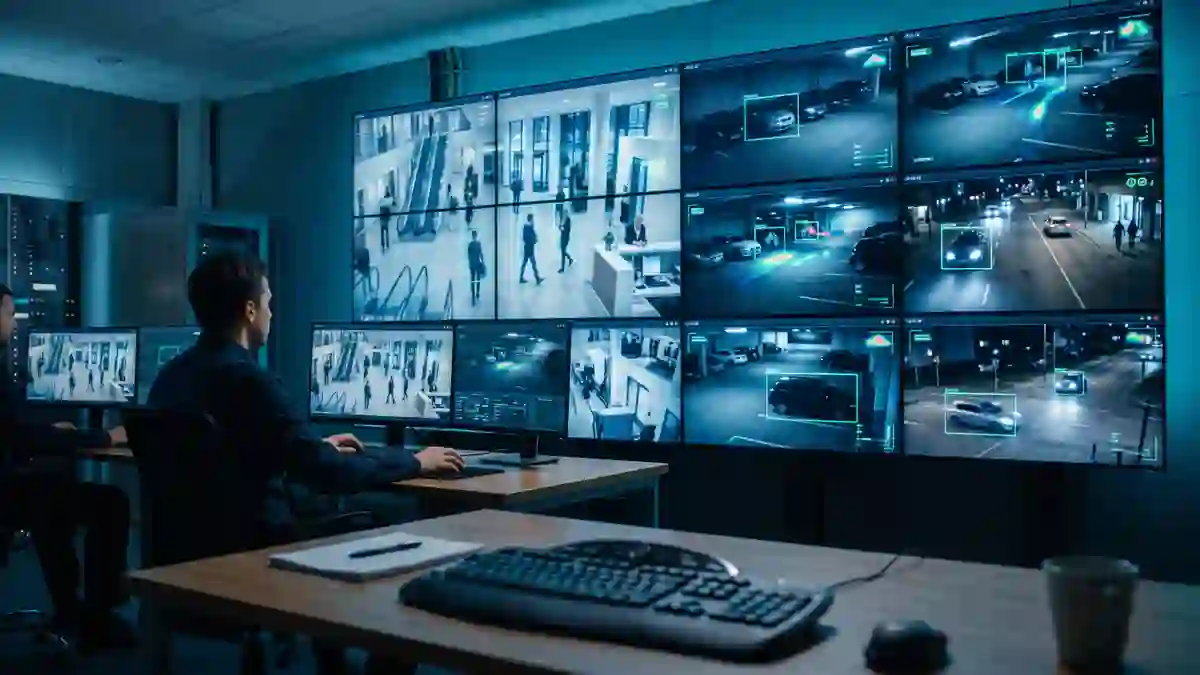
A traditional CCTV system records everything, and a person has to make sense of the archive: scrubbing through hours of footage, cross-checking cameras, hunting for the right moment. Hik-Connect 7 shifts that work to AI — the system analyses what happens, builds a timeline, and answers questions. It is organised into three pillars: AI Guardian, AI Search and AI Assistant.
AI Guardian — know what is happening and respond fast
This pillar covers real-time monitoring and response, with four functions:
- Focus — you set a target (say, a specific vehicle), a time and a location, and HIKO links footage across cameras as the target appears, builds an ordered timeline and writes a summary.
- AI Notification — instead of a fixed list of alarm types, you describe what you want to be alerted about in plain language (“alert me if someone falls and doesn’t get back up”), and the rule is applied going forward.
- AI Deterrence — tiered responses, from a standard warning to a targeted one that calls out the specific person or vehicle and describes their appearance and location.
- AI Summary — compiles a camera channel’s people, vehicles and alerts from the past 24 hours into a single daily overview, so a manager can catch up in minutes instead of piecing it together from separate logs and footage.
AI Search — find the right target and understand what happened
Here the AI helps you work with the archive:
- Video Q&A — ask a direct question about a scene instead of scrubbing through hours of recordings.
- Fusion Search — combines video, access control and license-plate information into one picture of where someone has been, without pulling records from three separate systems.
AI Assistant — keep the system running smoothly
A single instruction in natural language (for example, setting up access for a specific vehicle) triggers HIKO to carry out the chain of setup steps that used to be configured one at a time. That lowers the barrier: not only an engineer but also a site administrator can work with the system.
What it means for business in Thailand
For hotels, restaurants, villas, condominiums and retail in Phuket and beyond, the main benefit is less manual work and faster incident review. A few practical scenarios:
- Hotel or condominium — quickly find a guest or vehicle by description, get one picture of movement across the property, and a daily summary for the security team.
- Restaurant or bar — monitor entrances and parking, get alerts on unusual situations, and resolve disputes without replaying an entire shift.
- Villa or private home — clear plain-language notifications instead of configuring dozens of alarm types.
- Retail and warehouse — unified search across video and access control for fast incident review.
What to check before you deploy
This is a product announcement, so a few details are worth verifying for your specific site rather than taking at face value:
- Data and privacy. HIKO processes video in the cloud, and analysing faces, people and plates is sensitive. Thailand’s Personal Data Protection Act (PDPA) applies: using footage and biometrics has to be set up properly, with notice and a lawful basis.
- Device support. Some AI features depend on the camera and recorder models. It is worth confirming which devices in your fleet actually support the HIKO features before making promises.
- Availability and pricing. The release gives no figures on accuracy, latency, cloud-processing limits, or which features are available in your region at launch. That needs to be confirmed with the supplier.
Bottom line: Hik-Connect 7 is a clear step toward “AI by default” in video surveillance. Its strengths are that the AI arrives as a software update with no extra hardware, and that the system can be operated in plain language. But the real-world payoff on a given site depends on the camera models, the configuration and compliance with local data rules.
How we can help
WLTT designs and installs video surveillance and access-control systems in Thailand. We can help you assess which of the new features are genuinely useful for your site, which cameras and recorders you need for them, and how to handle the data side correctly. If you already run Hikvision equipment, we can advise on what the new platform version adds for you.