Power over Ethernet (PoE) is one of those technologies that quietly transformed how engineering systems are designed. One cable — both power and data. No ceiling outlets for access points, no extension cords to the parking lot camera, no separate power adapters for wall-mounted audio panels. For restaurants, hotels, sports complexes and offices in Thailand, where we design and install systems every day, PoE has become the de facto standard.
In this article — a comprehensive breakdown of PoE technology in 2026: from basic IEEE standards to real-world case studies from our practice, current year trends and the future outlook.
What is Power over Ethernet and why it matters
PoE is a technology that delivers electrical power and data over the same Ethernet cable (twisted pair Cat5e/Cat6/Cat6A). A device connected to a PoE switch port receives power without a separate outlet. This simplifies installation, reduces cabling infrastructure costs and gives centralized power control over all connected devices.
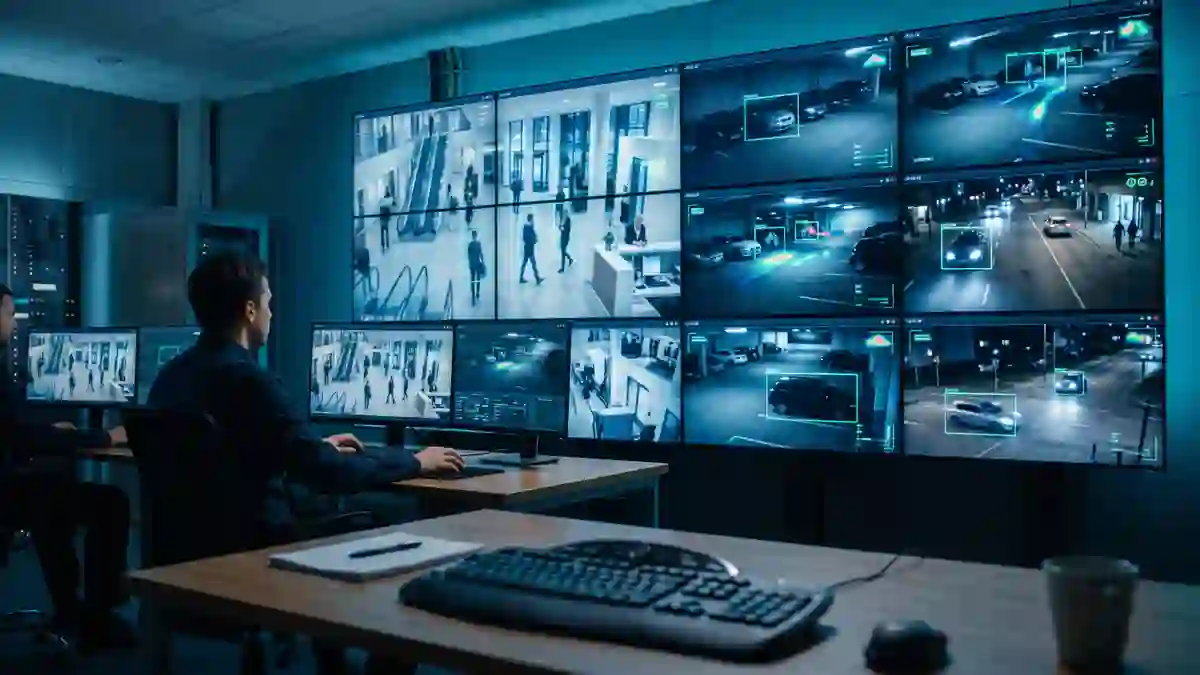
Imagine a 5,000 m² sports complex: dozens of CCTV cameras, WiFi access points on every floor, wall-mounted audio control panels in every zone. Without PoE, each device needs a separate power cable. With PoE — a single Cat6 cable handles everything.
«PoE is not just a convenience. It is an architectural decision that determines the cost, installation speed and reliability of the entire system.»
PoE standards: from 15 W to 90 W
The IEEE institute is responsible for developing the technology. Today there are four main standards, each increasing power and expanding the list of supported devices.
IEEE 802.3af — PoE (Type 1)
The first standard, adopted in 2003. Provides up to 15.4 W at the switch port (PSE), of which approximately 12.95 W reaches the device (PD) — the rest is lost in the cable. Uses two out of four twisted pairs. Sufficient for IP phones, basic access points, wall controllers and sensors.
- PSE power: up to 15.4 W
- PD power: up to 12.95 W
- Pairs used: 2 of 4
- Typical devices: IP phones, basic WiFi APs, AUDAC wall panels (NWP222, NWP300, NCP105)
IEEE 802.3at — PoE+ (Type 2)
The 2009 standard that doubled the power. Up to 30 W at the PSE port and approximately 25.5 W at the device. Still two pairs but with increased current. Covers the needs of most modern IP cameras, medium-power PTZ cameras and Wi-Fi 5 (802.11ac) access points.
- PSE power: up to 30 W
- PD power: up to 25.5 W
- Pairs used: 2 of 4
- Typical devices: PTZ cameras, Wi-Fi 5 APs, VoIP terminals, small LED panels
IEEE 802.3bt — PoE++ (Type 3 and Type 4)
The 2018 standard — a revolutionary step. Uses all four twisted pairs and delivers significantly more power. Type 3 (PoE++) provides up to 60 W at the PSE (51 W at the PD), Type 4 (4PPoE) — up to 90–100 W at the PSE (71 W at the PD). This opened the door for a new class of devices: Wi-Fi 6E/7 APs with high power consumption, thin clients, digital signage, powerful PTZ cameras with heaters and even laptops.
- Type 3: up to 60 W (PSE) / 51 W (PD) — Wi-Fi 6/6E APs, multi-radio APs, AV bars, IoT gateways
- Type 4: up to 90–100 W (PSE) / 71 W (PD) — digital signage, mini PCs, LED lighting, POS terminals
- Pairs used: all 4 of 4
- Backward compatible with 802.3af and 802.3at
- Recommended cable: Cat6A (lower resistance, better heat dissipation)
PoE standards comparison table
For quick reference — key specifications of each standard:
- 802.3af (PoE): 15.4 W, 2 pairs, Cat5e+ — IP phones, sensors, wall panels
- 802.3at (PoE+): 30 W, 2 pairs, Cat5e+ — IP cameras, Wi-Fi 5 APs, VoIP
- 802.3bt Type 3 (PoE++): 60 W, 4 pairs, Cat5e+/Cat6A rec. — Wi-Fi 6/6E/7 APs, PTZ cameras
- 802.3bt Type 4 (4PPoE): 90–100 W, 4 pairs, Cat6A rec. — LED lighting, digital signage, mini PCs
Real-world case: PoE at LUDUS Sports Complex, Chalong
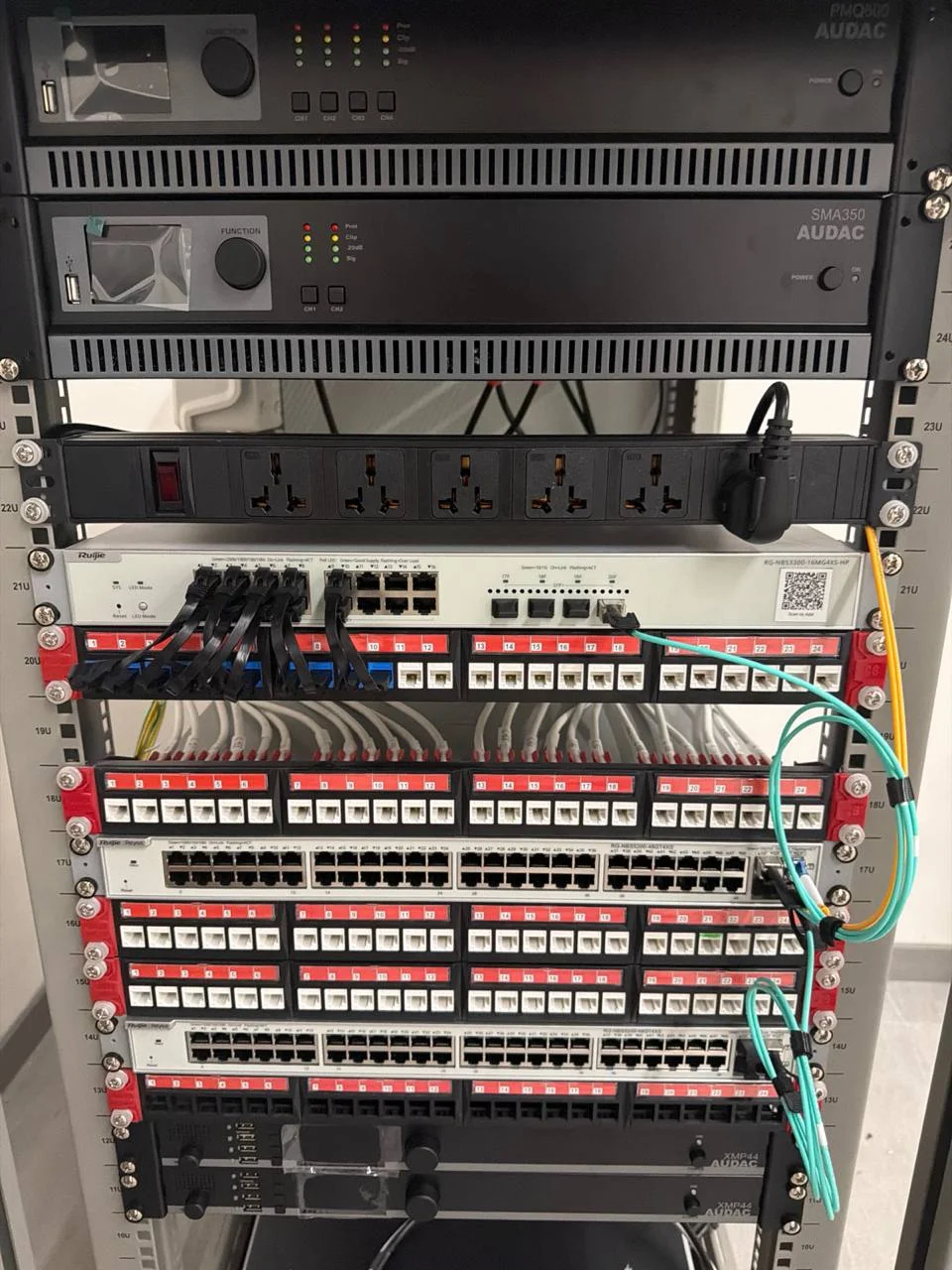
Theory is great, but technology reveals itself best in real projects. LUDUS Sports Complex is a 5,000 m² fitness facility in Chalong, Phuket, where WLTT handled the full project cycle: design, supply, installation and maintenance of all engineering systems. Here we used multiple PoE standards for different tasks.
PoE++ (802.3bt) for Ruijie WiFi infrastructure
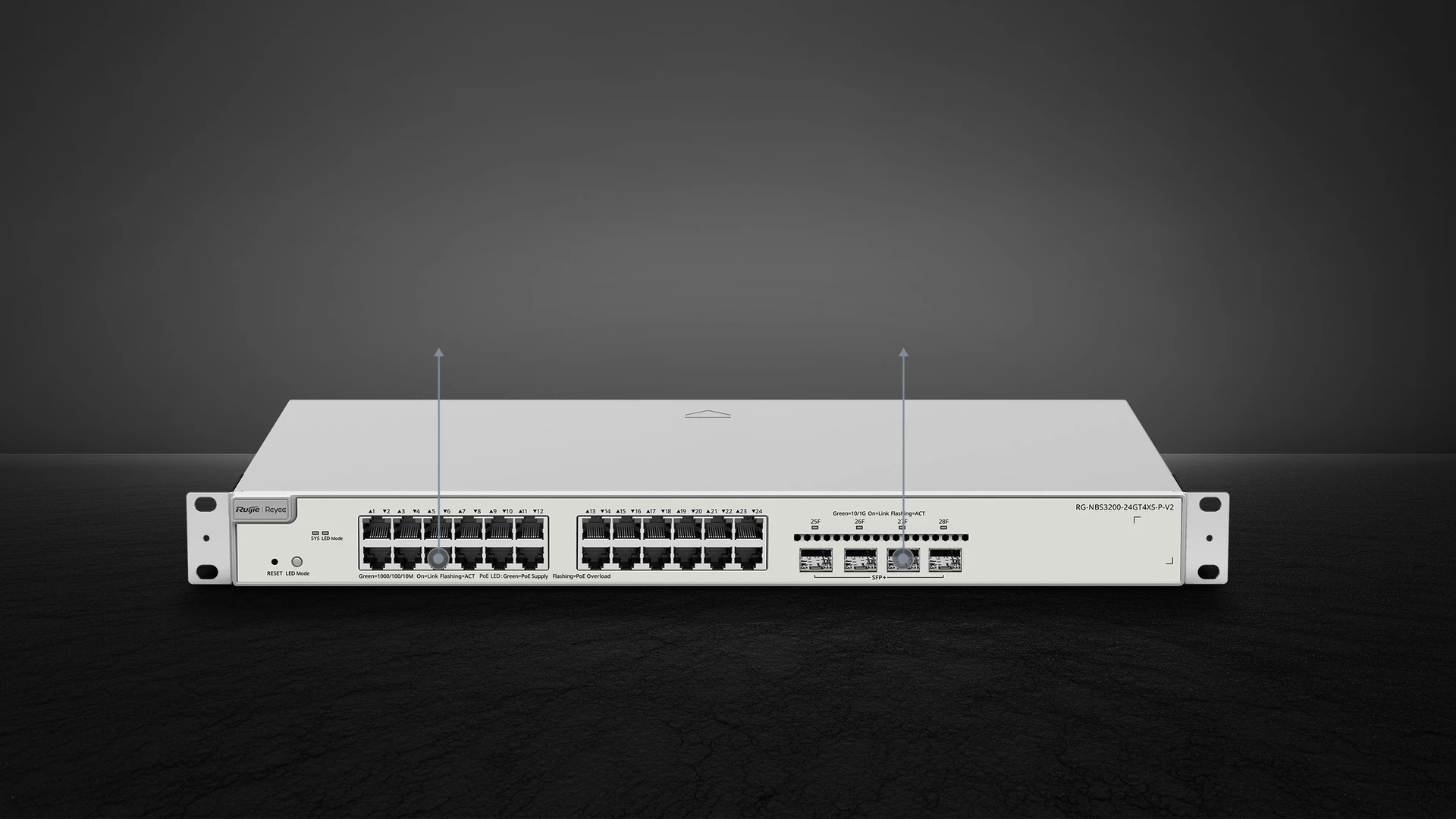
For full WiFi coverage across the complex, we installed Ruijie access points supporting Wi-Fi 6. Modern APs consume 25–35 W, and the 802.3bt (PoE++) standard powers them with headroom — even models with multiple radios and high throughput. Ruijie PoE++ switches provide stable power to each access point over a single Cat6 cable.
Result: seamless WiFi coverage across the entire LUDUS facility — from gym floors to reception — with separate guest access (via Captive Portal) and a staff network.
PoE++ (802.3bt) for Hikvision CCTV
The LUDUS CCTV system is built on high-resolution Hikvision cameras. Cameras are installed in gyms, at entrances and along the perimeter. For PTZ cameras and cameras with IR illumination consuming 20–45 W, we also used PoE++ (802.3bt). This eliminated the need for separate power adapters and simplified installation: one cable from switch to camera — and everything works.
PoE (802.3af) for AUDAC audio panels
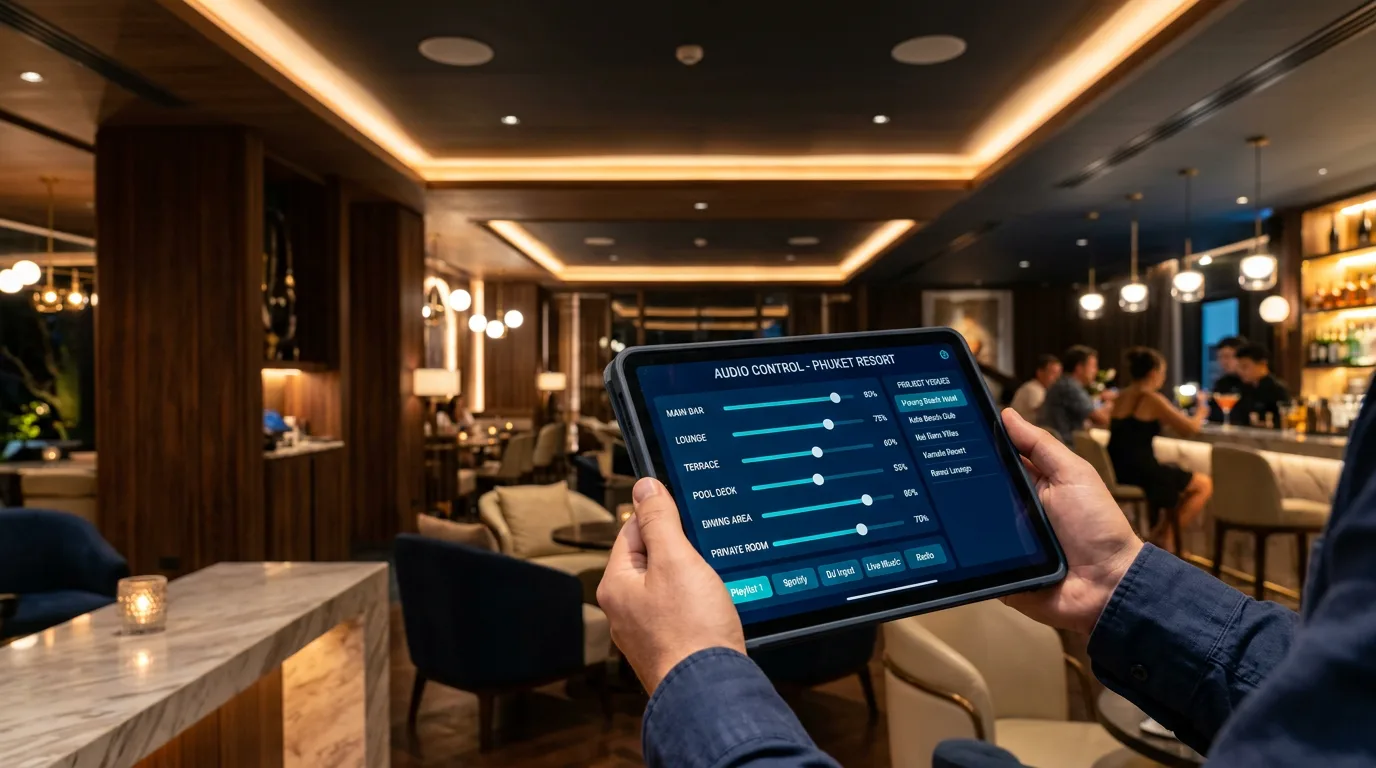
The LUDUS sound system is built on professional AUDAC equipment with Dante digital audio network and Audac Touch 2 management. Wall controllers NWP222/B, NWP300/B, NCP105/B and NWP320/B are installed in every zone — gym floors, conference room, spa, retail shop. All these panels are powered via PoE (802.3af): they need just 5–10 W, and standard PoE is more than sufficient.
This is a clear example of how different PoE standards coexist at a single site: powerful 802.3bt for WiFi and cameras, and efficient 802.3af for audio panels — all through a unified Cat6 cabling infrastructure.

Where PoE is used: typical scenarios
Beyond our LUDUS case, PoE technology is actively used across a wide range of projects:
- WiFi networks: Wi-Fi 6/6E/7 access points are the primary PoE++ consumers in commercial facilities.
- CCTV: IP cameras of any class — from fixed to PTZ — are powered via PoE/PoE+/PoE++.
- Audio systems: wall panels and controllers (AUDAC, Biamp, Q-SYS) run on standard PoE.
- Access control: face recognition terminals, card readers, turnstiles.
- IP telephony and conferencing: VoIP phones, AV bars for meeting rooms.
- LED lighting: PoE-powered lighting for smart buildings is one of the fastest growing segments.
- IoT sensors: temperature, humidity, occupancy and air quality sensors.
- Digital signage: displays and information panels in restaurants, hotels, airports.
Cabling infrastructure requirements
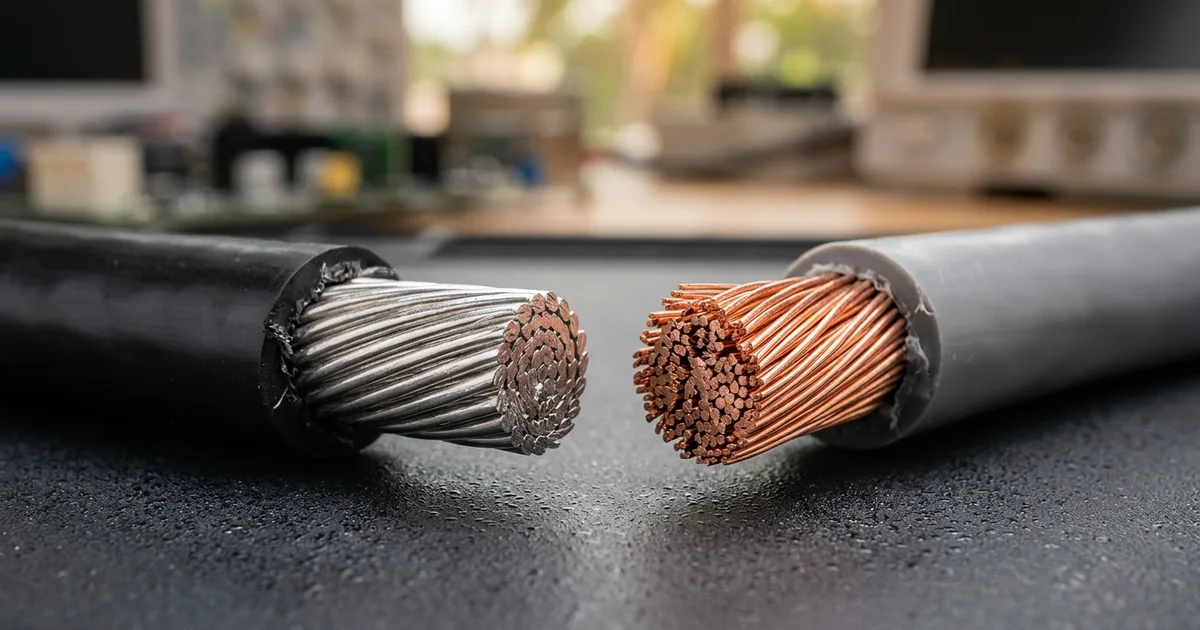
Not every cable is equally suited for PoE, especially at higher power levels. For a detailed breakdown of cable categories and why CCA should never be used, see our CAT5e, CAT6 and CAT6A cable guide. Here is what to consider when designing:
Cat5e, Cat6 or Cat6A?
Formally, the 802.3bt standard allows Cat5e. In practice, however, we recommend Cat6A for all PoE++ (802.3bt) projects. The reason is thermal losses. Cat5e has higher resistance, and at 802.3bt currents it heats up more, especially in bundles. Overheating leads to increased resistance, voltage drop at the device and, in the worst case, unstable operation or shutdown.
- Cat5e: acceptable for 802.3af/at, but not recommended for 802.3bt on long runs.
- Cat6: optimal for 802.3af/at and acceptable for 802.3bt Type 3.
- Cat6A: recommended for 802.3bt Type 3 and Type 4. Lower resistance, better heat dissipation, 10 Gbps support.
Cable bundle heating
This is one of the most underestimated problems. When 24 or 48 PoE cables run in the same tray, the temperature inside the bundle can rise 10–20°C above ambient. In Thailand's hot climate, this is especially critical. In our designs, we allow extra margin and recommend shielded cable (STP) for high-density PoE bundles.
PoE switch power budget
A common design mistake: "48-port PoE switch = 48 ports × 30 W = 1,440 W". In reality, the switch's Power Budget is usually significantly less than the sum of maximum power across all ports. A typical 48-port PoE+ switch may have a budget of 370–740 W.
The right approach is to calculate the actual consumption of each connected device and compare the total with the switch budget. Modern switches use LLDP-MED for precise power negotiation, allowing more devices to be connected without exceeding the budget.
- Calculate real consumption, not the standard maximum.
- Use LLDP-MED for dynamic power allocation.
- Set PoE priorities: critical devices (cameras, APs) get power first.
- Apply PoE scheduling: disable power to unused devices during off-hours.
2026 PoE trends
The Power over Ethernet market continues to grow at impressive rates. According to industry analysts, the global PoE market is valued at $4.34 billion in 2026 with a forecast of $13 billion by 2032 (CAGR of 20.1%). The PoE IC market will reach $0.76 billion in 2026. What is behind these numbers?
1. Wi-Fi 7 and Multi-Gig PoE
The new generation of Wi-Fi 7 (802.11be) access points consumes 30–50 W and requires 2.5G/5G/10G Ethernet connectivity. The combination of PoE++ with Multi-Gig PHY creates so-called "thermal synergy": both components generate heat. This makes the choice of Cat6A cabling and proper switch cooling critically important.
2. PoE lighting in smart buildings
The PoE LED lighting market will reach 544.8 million units by 2026 (CAGR of 14.1%). Each luminaire becomes a network node with occupancy, temperature and ambient light sensors. This enables up to 80% energy savings on lighting and collects space utilization analytics data. Cities in the Asia-Pacific region, including smart city projects in Thailand, are actively adopting this technology.
3. PoE for IoT and smart buildings
Over 48% of enterprise network upgrades in 2026 include PoE devices. About 42% of smart infrastructure projects use PoE for device power. The convergence of power and data in a single cable fits perfectly into the IoT paradigm, where hundreds of sensors and devices need to be connected with minimal infrastructure costs.
4. Intelligent PoE solutions and cybersecurity
The new generation of PoE switches features AI-driven power management, real-time monitoring of connected devices and built-in cybersecurity capabilities. Switches can detect suspicious devices, restrict their power and send alerts to administrators.
Outlook for 2027 and beyond
Where is PoE technology heading? Several key development directions:
- Power beyond 100 W: solutions are being developed to power monitors, laptops and full workstations over Ethernet. Some vendors already offer proprietary solutions at 130–150 W.
- Single Pair Ethernet (SPE) + PoE: the IEEE 802.3cg (10BASE-T1L) standard enables data and power over a single pair at distances up to 1,000 m. Ideal for industrial IoT and smart agriculture.
- PoE as building network backbone: new construction projects increasingly specify PoE infrastructure instead of traditional power wiring for low-voltage devices.
- Energy efficiency standardization: new IEEE standards are expected to optimize standby power consumption (Sleep Mode) for PoE devices.
- Renewable energy integration: PoE switches powered by solar panels for remote sites and locations without centralized power supply.
«By 2030, up to 70% of all connected devices in commercial buildings will be powered via PoE. This is not a forecast — it is the direction in which the biggest market players are already investing.»
How to choose the right PoE standard for your project
The choice of standard depends on the type of devices you plan to connect. Here is a simple guide:
- Up to 12 W (sensors, IP phones, AUDAC wall panels): 802.3af is sufficient.
- 13–25 W (IP cameras, Wi-Fi 5 APs, VoIP terminals): 802.3at (PoE+).
- 26–51 W (Wi-Fi 6/6E/7 APs, PTZ cameras, AV bars): 802.3bt Type 3 (PoE++).
- 52–71 W (digital signage, LED lighting, mini PCs, POS): 802.3bt Type 4 (4PPoE).
In practice, we recommend choosing a switch with 802.3bt support even if all current devices fit within 802.3at. PoE++ switch prices have dropped, and the power headroom guarantees compatibility with next-generation equipment.
WLTT: PoE infrastructure design and installation
WLTT is a team of engineers that designs and delivers comprehensive engineering systems for commercial properties in Thailand: restaurants, hotels, sports complexes, offices. PoE infrastructure is an integral part of every project we handle.
What we do:
- Design cabling infrastructure with PoE requirements and thermal budgets in mind.
- Select switches with optimal power budgets (Ruijie, Hikvision).
- Install WiFi, CCTV, AUDAC sound systems, access control — all PoE-powered.
- Configure VLANs, QoS, PoE priorities and schedules for optimal resource allocation.
- Maintain installed systems and provide ongoing support.
If you are planning construction, renovation or modernization of a facility — get in touch. We will design and deliver the engineering infrastructure where PoE works correctly from day one.