If you have ever looked at a cable datasheet, you have probably seen markings like "TIA/EIA-568-B.2" or "ANSI/TIA-568-C.2". Some contractors reference "standard B", others — "standard C", and the client is left wondering: are they the same thing? Or is "B" outdated while "C" is the one to follow now?
In this article we compare both standards from a practical standpoint — installation, testing and operation of cabling systems in real-world conditions in Thailand.
What are these standards and why do they matter
ANSI/TIA-568 is a series of standards defining requirements for structured cabling systems (SCS) in commercial buildings. The standard covers everything: cable types, connectors, installation rules, testing procedures and labelling. The letter at the end (A, B, C, D) is the revision number — the version of the document.
- TIA/EIA-568-A — first version (1991), fully obsolete.
- TIA/EIA-568-B — second revision (2001). Document B.2 covers twisted pair.
- TIA/EIA-568-B.2-1 — addendum to B.2, introducing Category 6 specifications.
- ANSI/TIA-568-C.2 — third revision (2009), replaced B.2 and all its addenda.
- ANSI/TIA-568.2-D — current revision (2018), replaced C.2.
Important: the letters A/B/C/D designate the standard revision, not the T568A and T568B wiring schemes. This is a common source of confusion. T568A and T568B are colour sequences for conductors in an RJ-45 connector, and they remain identical across all revisions.
TIA/EIA-568-B.2-1 — what it covers
Standard 568-B.2 (2001) defined baseline requirements for Category 5e components and channels. Addendum B.2-1 (2002) introduced Category 6 specifications: 250 MHz bandwidth, tighter crosstalk requirements (NEXT, PSNEXT, ELFEXT, PSELFEXT) and new Return Loss parameters.
In practice, 568-B.2-1 is the document against which the first generation of Cat6 cable was developed and tested. It still appears on cable markings from Asian manufacturers — especially in Thailand, where some stock has a long shelf life.
| Parameter | What it defines |
|---|---|
| Bandwidth | 100 MHz (Cat5e) / 250 MHz (Cat6) |
| NEXT (Near-End Crosstalk) | Crosstalk at the near end |
| PSNEXT | Power-sum NEXT across all pairs |
| ELFEXT / PSELFEXT | Far-end crosstalk normalised for attenuation |
| Return Loss | Signal reflection due to impedance mismatch |
| Insertion Loss | Signal attenuation over channel length |
ANSI/TIA-568-C.2 — what changed
568-C.2 (2009) is not a revolution but an evolution. It consolidated the base B.2 document and all its addenda (including B.2-1), resolved contradictions, updated test methods and introduced several important parameters. Here is what changed in practice.
1. Alien Crosstalk (AXT)
This is the headline change, critical for Category 6A and 10GBASE-T. Standard B.2 tested only internal crosstalk — between pairs within the same cable. C.2 added requirements for crosstalk between adjacent cables — Alien Crosstalk.
- PSANEXT (Power Sum Alien Near-End Crosstalk) — aggregate external crosstalk at the near end.
- PSAACRF (Power Sum Alien Attenuation to Crosstalk Ratio, Far-End) — external crosstalk at the far end.
In practice this means that for Cat6A you need to test not just an individual cable but a bundle of cables under real installation conditions. The standard defines a "6-around-1" configuration: one "victim" cable in the centre, six "disturbers" around it. This is exactly why shielded cable (STP/FTP) or high-quality unshielded Cat6A with increased pair separation is essential for 10-gigabit links.
2. Tighter Category 6A parameters
C.2 formalised Category 6A (Augmented Category 6) with 500 MHz bandwidth and 10GBASE-T support over a full 100 metres. Under the 568-B framework this category did not formally exist — it appeared only in addendum TIA-568-B.2-10, which was then folded into C.2.
| Parameter | 568-B.2-1 (Cat6) | 568-C.2 (Cat6) | 568-C.2 (Cat6A) |
|---|---|---|---|
| Bandwidth | 250 MHz | 250 MHz | 500 MHz |
| Max speed | 1 Gbps (100 m) | 1 Gbps (100 m) | 10 Gbps (100 m) |
| Alien Crosstalk | Not tested | Not tested | Mandatory |
| NEXT @100 MHz | ≥ 39.9 dB | ≥ 39.9 dB | ≥ 39.9 dB |
| Return Loss @100 MHz | ≥ 20.1 dB | ≥ 20.1 dB | ≥ 20.1 dB |
3. Updated field testing procedures
C.2 tidied up field testing procedures. If you use a Fluke DSX CableAnalyzer or equivalent, it is already set to C.2 limits — and during testing it will show PASS or FAIL against these criteria.
The practical difference: a channel that passed under B.2 limits may fail under C.2 limits. This does not mean the cable "got worse" — the criteria became stricter, and marginal links are now filtered out.
4. "EIA" dropped from the name
A purely formal change: the EIA (Electronic Industries Alliance) ceased to exist, and from revision C onward the standard is called ANSI/TIA-568 without "EIA". If a cable reads "TIA/EIA-568-B.2" — that is the old marking. "ANSI/TIA-568-C.2" — the new one. No effect on the cable's physical properties.
Practical comparison: what it means for the installer and the client
Cable markings on the shelf
If you buy cable in Thailand and see "TIA/EIA-568-B.2" on the jacket, it does not mean the cable is bad or obsolete. It means it was produced when standard B.2 was in effect (or the manufacturer has not updated the print). Physically, Cat6 cable remains Cat6 regardless of the standard revision — provided it genuinely meets the category requirements.
Testing an installed link
This is where the difference matters. If the client or design firm requires certification to C.2 — and for new installations this is the correct approach — you must test against C.2 limits. Fluke DSX-5000 and DSX-8000 testers let you choose between "TIA Cat6" (which maps to C.2) and "TIA Cat6A" (also C.2). B.2 limits in modern testers are typically listed as "legacy".
Designing for 10 Gbps
If you are planning a network with a view to 10GBASE-T — for example backbone links between floor switches, a server room, or high-density WiFi 6E/7 — you need Cat6A to standard C.2 (or the current D). Standard B.2 simply does not contain Cat6A or alien crosstalk specs, so referencing it for 10-gigabit projects is incorrect.
Component compatibility
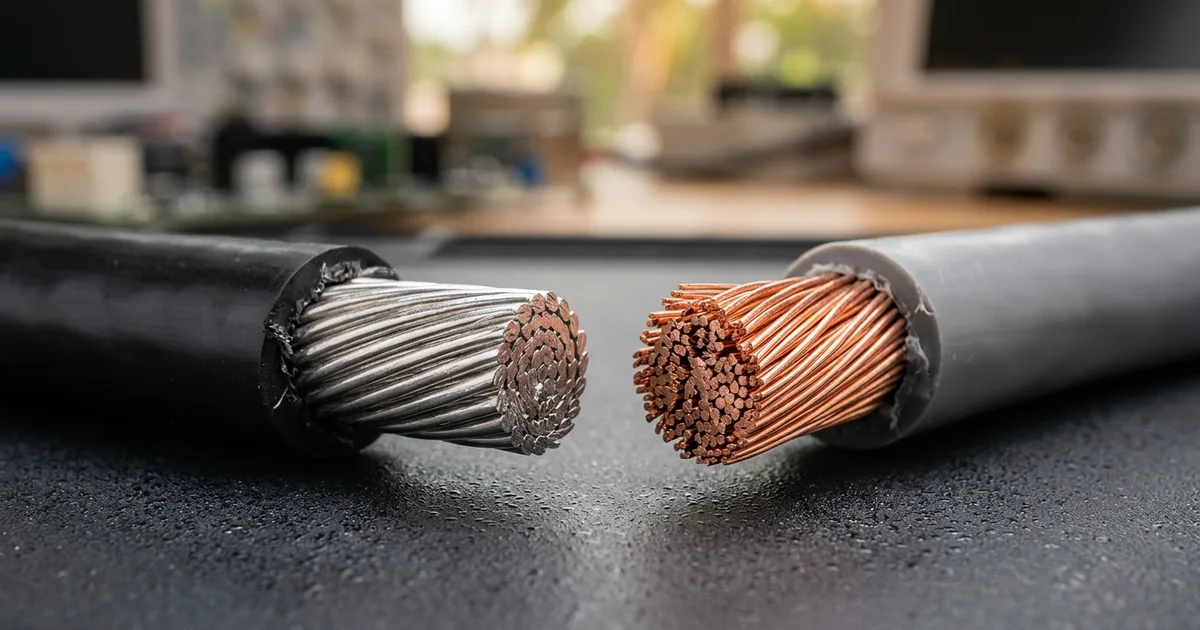
Cat6 cable manufactured to B.2-1 is physically compatible with connectors and patch panels rated for C.2 — as long as the category matches. The T568A and T568B wiring schemes are identical across all revisions. The only thing to watch for is the quality of the cable itself: compliance with the stated category, conductor material (solid copper vs. CCA), and adherence to diameter and twist-rate tolerances.
T568A vs T568B — a separate topic
Let us repeat this because the confusion persists even among experienced installers: T568A and T568B are not standards A and B. They are two conductor colour sequences for the RJ-45 connector.
| Pin | T568A | T568B |
|---|---|---|
| 1 | White-green | White-orange |
| 2 | Green | Orange |
| 3 | White-orange | White-green |
| 4 | Blue | Blue |
| 5 | White-blue | White-blue |
| 6 | Orange | Green |
| 7 | White-brown | White-brown |
| 8 | Brown | Brown |
Electrically both schemes are identical — all four pairs retain their characteristics. T568B is historically more common in commercial installations (especially in North America and South-East Asia). T568A is more often used in US government facilities. The key rule: both ends of a cable must use the same scheme.
What about 568.2-D — the current version?
Since 2018 the current standard is ANSI/TIA-568.2-D, which replaced C.2. Key additions:
- MPTL (Modular Plug Terminated Link) — horizontal cable may now be terminated directly with an RJ-45 plug for cameras, access points and other devices without a wall outlet.
- 28 AWG patch cords — thinner, more flexible, better airflow in dense racks. Limitation: shorter channel length due to higher attenuation.
- Category 8 — 2,000 MHz bandwidth, 25/40 Gbps, up to 30 metres. For data centres, not horizontal runs.
- DC Resistance Unbalance — new parameter supporting PoE over all four pairs (802.3bt).
For most projects in Thailand — restaurants, hotels, offices, villas — the difference between C.2 and D is minimal. But if you work with WiFi 7 (access points drawing up to 50–60 W via PoE++) or plan 10G backbones — you should target D.
WLTT recommendations
On our projects we follow these principles:
- For horizontal runs we use Cat6 UTP/FTP — 250 MHz, 1 Gbps over 100 m. Sufficient for 99% of tasks: WiFi, CCTV, POS, IP telephony, audio.
- For backbone links and future-proof projects — Cat6A S/FTP, tested to C.2 / D limits including alien crosstalk.
- We test every link with a Fluke DSX — issuing a PASS/FAIL report. Not a "visual check", not "it pings so it works".
- We use only solid copper (BC) cable. CCA (copper-clad aluminium) is never used — see our CAT5e/CAT6/CAT6A cable guide for details.
- MPTL is used for ceiling-mounted cameras and access points — faster, more reliable and cheaper than installing an outlet for a single device.
Conclusion
TIA/EIA-568-B.2-1 and ANSI/TIA-568-C.2 are not competing standards — they are successive revisions of the same document. C.2 replaced B.2 in 2009, and in 2018 it was in turn superseded by D. For the installer, the main practical difference is tighter test limits and mandatory alien crosstalk for Cat6A. For the client — confidence that certification to the current standard means the network will work not just today but in 10–15 years.
«A standard is not bureaucracy. It is the guarantee that in five years your network will not fall apart because an installer decided "good enough" by eye.»